
Weathering the Storm: Using Yoga to Distinguish Between Distress and Stress
Christa Hogan | AUG 27, 2024

Into every life a little rain must fall--even for yogis. So how can yoga help us weather difficult seasons of life?
To answer this question, I think it's helpful to start by understanding the difference between two main categories of suffering, according to the yoga sutras. While suffering may not be a pleasant topic of discussion, having the right words and a clearer understanding can help us better process and learn from our experiences.
Distress vs. Stress
Suffering, according to the yoga sutras, is a part of life. Suffering happens to everyone, the wise and the unwise. But, the sutras say, we can prevent future, unnecessary suffering through the path of yoga.
I find it helpful to think of suffering and unnecessary suffering as the difference between distress and stress. Distress is a natural, emotional response to loss or a large, unexpected upheaval. Stress, on the other hand, occurs when we identify with the worries, fear, and anxiety created by our minds.
For example, if you lose your car keys when you're running late to work, you will naturally feel distress. How stressed you then become--worrying about losing your job is, to some extent, a choice. Since feeling stress is not a conscious decision, stress often feels involuntary--as if it's happening to us. Add into the equation trauma, habits, and the social conditioning that rewards stress, and stress can feel anything but optional.
De-stressing Events
The good news is that we can choose better. Yoga, meditation, self-reflection, and journaling (and talk therapy!) lower your stress, lift your awareness (consciousness), build your inner resilience (ability to recover from distressing events), and counter the physical impact of increased levels of cortisol.
Fortunately, these same practices can also support us when we're feeling very real distress, like after the loss of a loved one. In that way, managing daily stress gives us many small, lower risk opportunities to form the resilience we need to face larger, more serious challenges.
Suffering--whether stress or distress-- may not be fun. But we don't need to resist or fear it either. With the right tools and perspective, the proverbial falling rain can bring new life and personal growth too.
Make It Practical
This week, extend yourself compassion when you notice you're suffering from stress. You're doing your best! If helpful, you can repeat the mantra, "Stress is a choice." Then, try one or more of these practices to lower your stress.
Body: Notice where you hold tension in your body. Practice progressive muscle relaxation, tightening and relaxing the different areas of your body to release tension. Throughout your work day, bring in some light movement, like shoulder rolls and shrugs, to let go of stress.
Breathwork: Use kapalabhati breath to ground yourself. Exhale forcefully through the nose by drawing the navel quickly toward the spine. Allow the inhale to occur naturally. Repeat for several minutes, or as able. Return to your natural breath rhythm. (Avoid kapalabhati if you are pregnant, become dizzy or nauseous, or have high blood pressure.)
Journal: What thoughts are behind your stress? Write them down and look at them objectively. Are they true or do they assume the worst? When you read or think the thought, how does your body respond? Alternatively, can you find a thought that's more helpful and hopeful? What if you assumed the best? How does your body respond to this new message?
Now, choose a trusted mentor or friend. From their perspective, write yourself a letter. Encourage yourself to find courage and hope in the face of stress and distress.
Looking for more support?
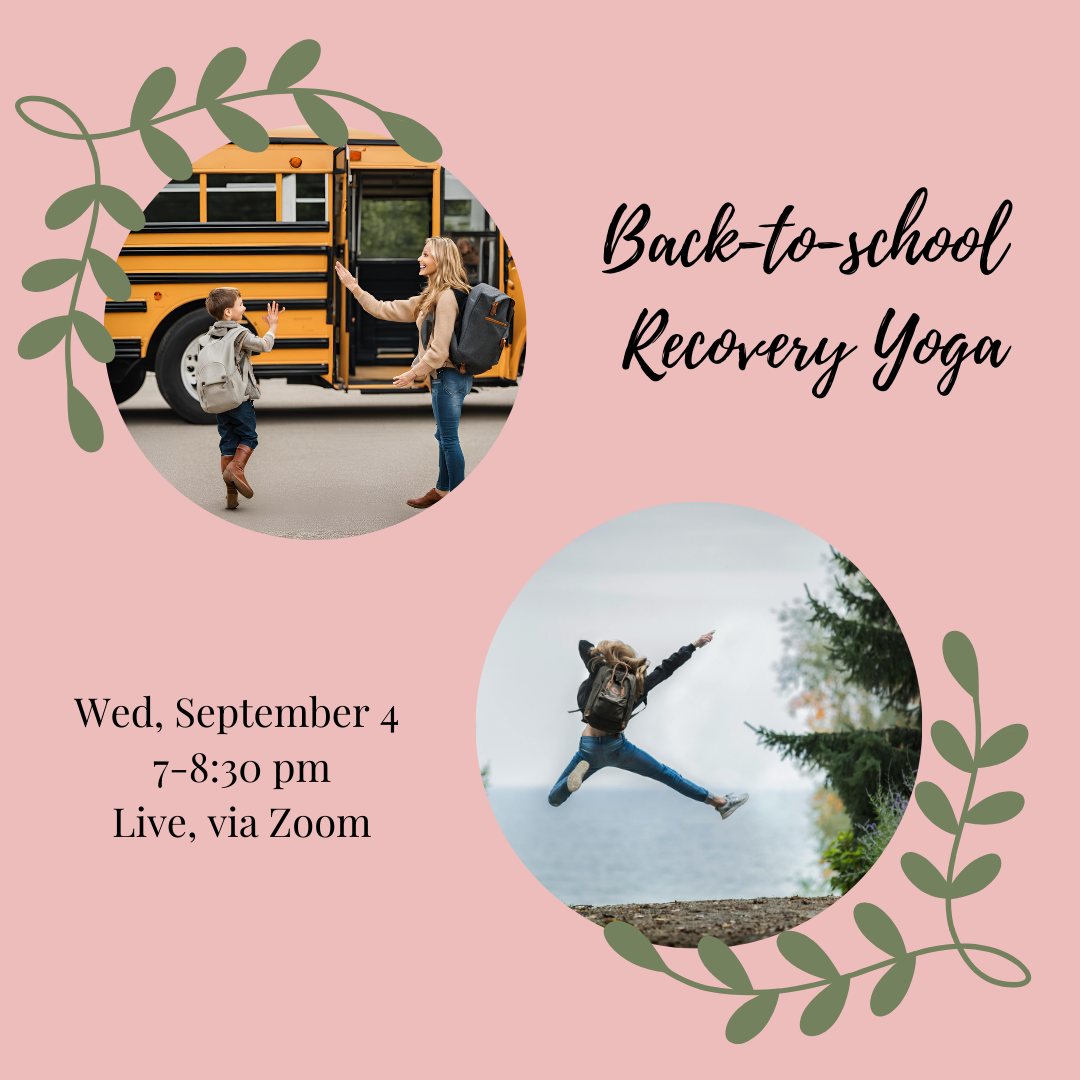
Join me on Wednesday, September 4th for a special, 90-minute Back-to-School Recovery Yoga class via Zoom.
Enjoy 75 minutes of deep stretch and restorative postures. Then work through all those back-to-school and pre-election feels with inspirational journal prompts.
I hope to see you there!
Christa Hogan | AUG 27, 2024
Share this blog post



 OfferingTree